Doctrine & Covenants 25:12

"For my soul delighteth in the song of the heart; yea, the song of the righteous is a prayer unto me, and shall be answered with a blessing upon their heads." (Doctrine and Covenants 25:12)

Sunday, April 15, 2012

Easter Music


For Easter, our Bishopric doesn't have the choir do the whole program, which is fine with me, since it's usually pretty close to Christmas, and we would be hard-pressed to prepare an entire program in the time between Christmas break, and Easter.  But we do prepare extra music.  This year we did three pieces, and here is a quick run-down of our Easter line-up for April 8, 2012

Risen Today, by Dan Forrest.
This is a very lively arrangement of the hymn Christ the Lord is Risen Today.  You really should go to Dan's website and listen to the recording.  (There is tamborine in the recording, which I LOVE, but of course, did not use.)  Some of my choir loved this piece and some  . . .  did not.  I loved it (obviously, or I wouldn't have chosen it).  I loved how joyful it made me feel, and if the resurrection is anything, it is an occasion to be JOYFUL about.  

**I actually went back and forth quite a lot about that song deciding whether or not it was appropriate for Sacrament meeting.  LDS Sacrament meetings tend to be very conservative, and for the most part I agree with that.  I'm not a fan of Christian Pop or anything like that.  I tend to stick to more traditional hymns.  But sometimes I feel like our congregations need a little "Hallelujah!" in them.  Sometimes, I feel like instead of the reverence we're aiming for, we're just getting complacence.  We're just singing along, not paying attention to the words or what they implicate in our lives, and sometimes a different setting of a hymn can help us understand the words in a new light.  I felt like this hymn did that for me and I hope it helped others feel a sense of pure joy and rejoicing in the Resurrection of our Savior.

There is a Green Hill Far Away, arr. by Christine Davis
This is a lovely arrangement of a beautifully simple hymn.  Lovely words, lovely melody.  This arrangement splits into 8 parts at the end and is just really gorgeous.  Loved it.

O Love That will not Let me Go, arr. by Joseph Martin
I won't delve into this piece because I already wrote an entire post about it.   Since this is not in our hymnal, I put the words in the program so the congregation could ponder the beautiful text.  The ward loved this song.

Sunday, February 12, 2012

O Love That Will Not Let Me Go

George Matheson
Born: March 27, 1842, Glasgow, Scotland
Died: August 28, 1906, Edinburgh, Scotland

George Matheson was called "The Blind Preacher."  He used very powerful glasses in his youth but by the age of 20 he had completely lost his eyesight, and relied on his good sister who helped him study and prepare his sermons and who kept his house for him.  He had a wonderful memory and delivered his sermons from memory.  He was known for his optimism in life despite the loss of his sight and was a very famous preacher known throughout Scotland.  He traveled to England to preach to Queen Victoria by her own invitation.  She had his sermon on "The Patience of Job" published so more people would be able to receive it.  He wrote many sermons, articles and books, but perhaps his most enduring and widely influential literary contribution was this simple hymn.


George Matheson said the following regarding the words of this hymn:

"My hymn was com­posed in the manse of In­ne­lan [Ar­gyle­shire, Scot­land] on the ev­en­ing of the 6th of June, 1882, when I was 40 years of age. I was alone in the manse at that time. It was the night of my sister’s mar­ri­age, and the rest of the fam­i­ly were stay­ing over­night in Glas­gow. Some­thing hap­pened to me, which was known only to my­self, and which caused me the most se­vere men­tal suf­fer­ing. The hymn was the fruit of that suf­fer­ing. It was the quick­est bit of work I ever did in my life. I had the im­press­ion of hav­ing it dic­tat­ed to me by some in­ward voice ra­ther than of work­ing it out my­self. I am quite sure that the whole work was com­plet­ed in five min­utes, and equal­ly sure that it ne­ver re­ceived at my hands any re­touch­ing or cor­rect­ion. I have no na­tur­al gift of rhy­thm. All the other vers­es I have ever writ­ten are man­u­fact­ured ar­ti­cles; this came like a day­spring from on high." (101 Hymn Stories by Kenneth W. Osbeck. Kregel Publications, 1982, emphasis added)


O Love That Will Not Let Me Go
O Love that wilt not let me go,
I rest my weary soul in thee;
I give thee back the life I owe,
That in thine ocean depths its flow
May richer, fuller be.

O light that followest all my way,
I yield my flickering torch to thee;
My heart restores its borrowed ray,
That in thy sunshine’s blaze its day
May brighter, fairer be.

O Joy that seekest me through pain,
I cannot close my heart to thee;
I trace the rainbow through the rain,
And feel the promise is not vain,
That morn shall tearless be.

O Cross that liftest up my head,
I dare not ask to fly from thee;
I lay in dust life’s glory dead,
And from the ground there blossoms red
Life that shall endless be.


I first encountered this hymn at the BYU Choral Academy Workshop.  It is not in our LDS hymnbook, but is a common hymn in many Christian churches.  The arrangement I heard at the Choral Academy (and therefore the one I am teaching the our ward choir) was composed by Joseph Martin.  To be honest, I did not fall in love with it instantly.  In fact, it wasn't until I heard a group of BYU students perform it for us, that I felt like I truly understood it, and was deeply moved by it.  As I listened I felt like every line was full of personal meaning just for me.  I believe the words of this hymn were truly inspired, and when one receives the message of this hymn through the spirit, the spirit will tailor the meaning of the words to each individual.


I have read and sung this text over and over, and it continues to speak to me.  There is so much exquisite, meaningful imagery throughout the piece.  I could go on and on about each line of text, but I'll just mention one.  The first line, "O Love that will not let me go" brings to my mind the image of Christ's hands pierced for us, and ever outstretched to receive us home, as the prodigal son returned home to the outstretched arms of his father.  No matter what our weaknesses, no matter how often we fail, His is a love that will not ever give up on us.  We are engraven upon His hands, and He will not let us go.  I cannot wait to share this hymn with our ward.

Sunday, February 5, 2012

Children of the Heavenly Father

Words:  Karolina W. Sandell-Berg, born 1832, Sweden
Music: Traditional Swedish Melody, arranged by Oskar Ahnfelt, born 1813, Sweden

On February 26th, our choir will be singing an arrangement of this hymn by Dan Forrest.  It has a cello obligato and we will be joined by a children's choir which is singing the first verse and a descant over the last verse.  It will be lovely!

 Here is a link to the Dan Forrest Choral Library.  You'll find the title about half way down the page, and you can listen to a recording of it.  

Children of the Heavenly Father

Children of the heav’nly Father
Safely in His bosom gather;
Nestling bird nor star in Heaven
Such a refuge e’er was given.

God His own doth tend and nourish;
In His holy courts they flourish;
From all evil things He spares them;
In His mighty arms He bears them.

Neither life nor death shall ever
From the Lord His children sever;
Unto them His grace He showeth,
And their sorrows all He knoweth.

Though He giveth or He taketh,
God His children ne’er forsaketh;
His the loving purpose solely
To preserve them pure and holy.


Lina Sandell was only 26 when she and her father went were on a boat, and he fell overboard and drowned before her eyes.  It is said that that experience is what inspired her to write hymns.  She wrote 650 hymns!

Oscar Ahnfelt composed or arranged the music for Sandell's hymns.  He traveled throughout Scandinavia singing her hymns and accompanying himself on a 10 string guitar.  Sandell wrote, "Ahnfelt has sung my songs into the hearts of the people."  

Though Deepening Trials

Text: Eliza R. Snow, 1804–1887
Music: George Careless, 1839–1932

Well, after a nice long break, the La Cueva Ward choir has resumed rehearsals.  We'll sing on February 12th, "Though Deepening Trials," to accompany the speakers' topic, "Adversity."  We're just doing the Hymplicity arrangement, but omitting the 4th verse because it's just a little too long.

To be honest, this isn't my most favorite hymn--there are other hymns I like better to go with this topic, but I was looking for something we could put together quickly since we'll only have 2 rehearsals to prepare it, and we're working on other things as well.  It's nice, but not my favorite.

But often, when I learn about a hymn, and the people who wrote it, I learn to love the hymn.  So here's a little bit about Eliza R. Snow, and George Careless, who were both pretty remarkable pioneers!

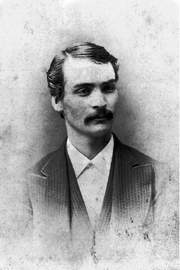
Eliza R. Snow          Photo of George Careless
Eliza R. Snow
  • Born- 1804 in Becket, Massachusetts
  • Her brother, Lorenzo would serve as the 5th president of The Church of Jesus Christ of Latter-Day Saints.
  • A talented writer from an early age.
  • At just 22 years old, she was requested by several newspapers to write a funeral mass for former Presidents John Adams, and Thomas Jefferson, (both of whom died on July 4, 1826).
  • Joined the church in 1835, and shortly thereafter moved to Kirtland, Ohio with the Saints.
  • Wrote many poems that have been set to music including "O My Father," "How Great the Wisdom and the Love," "In Our Lovely Deseret," and of course, "Though Deepening Trials."
  • Served in the church as secretary of the RS under Emma Smith as president, helped organize the first Primary, and served as General RS president for 21 years until shortly before her death.
  • a cool quote from Eliza, “There are many of the sisters whose labors are not known beyond their own dwellings, and perhaps not appreciated there. But what difference does that make? If your labors are acceptable to God, however simple the duties, if faithfully performed, you should never be discouraged.” 


George Careless
  • Born 1839 in London
  • Joined the church when he was 11 years old
  • George loved music from an early age.  He had a beautiful clear soprano voice as a boy and also learned to play the violin.
  • His father thought his music was a waste of time, and while others recognized & encouraged his talent, his father told him to either give it up or leave the family.  So George left home when he was 13.
  • Because of the kindness of a friend, he was able to attend the Royal Academy of Music.  He finished in 3 years instead of 4, and paid his friend back with his first earnings.
  • Served the church by improving the musical activities of the church in England.  
  • At Elder William C. Staines encouragement, he came to America in 1864, sacrificing a promising musical career in London.  On his ship, the Hudson, he led a choir composed of other Saints who were also immigrating to Utah.
  • Was called by Brigham Young to "take the Tabernacle Choir . . .  and lay a foundation for good music in Utah."
  • At the first rehearsal, the Tabernacle was still under construction, had no heating or lighting, and choir members held a candle in one  hand, and their music in the other.
  • George resigned his post as the director of the Tabernacle Choir after serving 11 years
  • Some of the hymns he composed music for are, "The Morning Breaks," "Prayer is the Soul's Sincere Desire," "O Thou Kind and Gracious Father," "He Died the Great Redeemer Died," and of course, "Though Deepening Trials." 


Though Deepening Trials

Though deepening trials throng your way,
Press on, press on, ye Saints of God!
Ere long the resurrection day
Will spread its life and truth abroad.

Though outward ills await us here, 
The time, at longest, is not long,
Ere Jesus Christ will reappear 
Surrounded by a glorious throng. 

Lift up your hearts in praise to God, 
Let your rejoicings never cease.
Though tribulations rage abroad
Christ says, "In me, ye shall have peace."

Wednesday, November 16, 2011

Ward Choir Christmas Program 2011

I thought I'd go ahead and put our entire Christmas program line-up here, complete with narration so that in the future, if other choir directors are looking for ideas for their own ward choirs, this may be useful. Also, for the benefit of my choir, the last two songs, "God Loved Us So He Sent His Son" and "Carol of Joy" have links to hear the entire piece.   And "Come to See Jesus the King" (SSA) has a link to a site where you can listen to a preview of the piece.    


Come into His Presence with Singing
By Cindy Berry

Narration:  And it came to pass in those days, that there went out a decree from Cæsar Augustus, that all the world should be taxed.  And all went to be taxed, every one into his own city. And Joseph also went up from Galilee, out of the city of Nazareth, into Judæa, unto the city of David, which is called Bethlehem; (because he was of the house and lineage of David:) To be taxed with Mary his espoused wife, being great with child.  (Luke 2:1-5)

When Joseph Went to Bethlehem
Arr. Larry Beebe

 Narration:  And so it was, that, while they were there, the days were accomplished that she should be delivered.  And she brought forth her firstborn son, and wrapped him in swaddling clothes, and laid him in a manger; because there was no room for them in the inn.  (Luke 2:6-7)

Away in a Manger
arr. Mack Wilberg

 Narration:  And there were in the same country shepherds abiding in the field, keeping watch over their flock by night.  And, lo, the angel of the Lord came upon them, and the glory of the Lord shone round about them: and they were sore afraid.  And the angel said unto them, Fear not: for, behold, I bring you good tidings of great joy, which shall be to all people.  For unto you is born this day in the city of David a Saviour, which is Christ the Lord. And this shall be a sign unto you; Ye shall find the babe wrapped in swaddling clothes, lying in a manger.  And suddenly there was with the angel a multitude of the heavenly host praising God, and saying, Glory to God in the highest, and on earth peace, good will toward men.  (Luke 2:8-14)

Far Far Away on Judea’s Plains
Arr. Amy Dalton

Narration:  And it came to pass, as the angels were gone away from them into heaven, the shepherds said one to another, Let us now go even unto Bethlehem, and see this thing which is come to pass, which the Lord hath made known unto us.  And they came with haste, and found Mary, and Joseph, and the babe lying in a manger.  (Luke 2:15-16)

By Kristen Allred

 Narration:  And when they had seen it, they made known abroad the saying which was told them concerning this child.  And the shepherds returned, glorifying and praising God for all the things that they had heard and seen, as it was told unto them.  (Luke 2: 17, 20)

Arr. Daniel McDavitt

Narration:  The prophet Gordon B. Hinckley said, “My heart is subdued when I think of the great love of my Heavenly Father. How grateful I am to know that God loves us. The incomprehensible depth of that love found expression in the gift of His Only Begotten Son to come into the world to bring hope into our hearts, to bring kindness and courtesy into our relationships, and above all to save us from our sins and guide us on the way that leads to eternal life.

“When all is said and done, when all of history is examined, when the deepest depths of the human mind have been explored, nothing is so wonderful, so majestic, so tremendous as this act of grace when the Son of the Almighty, the Prince of His Father’s royal household, He who had once spoken as Jehovah, He who had condescended to come to earth as a babe born in Bethlehem, gave His life in ignominy and pain so that all of the sons and daughters of God of all generations of time, every one of whom must die, might walk again and live eternally. He did for us what none of us could do for ourselves.”   (Gordon B. Hinckley, “The Wondrous and True Story of Christmas,” Dec. 2000 Ensign.)

Music by Dan Forrest, Lyrics by Eileen Berry

Sunday, November 6, 2011

Now Thank We All Our God


Text: Martin Rinkart; Trans. by Catherine Winkworth 
Music: Johann Cruger; Harm. by Felix Mendelssohn 
Tune: NUN DANKET


Martin Rinkart (1586-1649) was a Lutheran pastor in his home town of  Eilenburg, Saxony, Germany.  He began his services there at the beginning of the Thirty Year War (1618-1648).  Eilenburg became a refuge for political and military refugees and became highly over-crowded.  It was plagued with pestilence and famine, and was overrun by armies three times.

Rinkart's home was a refuge for the victims, even though he was struggling to care for his own family.  During the height of the plague in 1637, Rinkart was the only remaining pastor.  As a result he conducted 40-50 funerals a day, totaling 4,480 in all, including that of his own wife.

Despite the death and disease that he dealt with everyday, he kept his heart full of gratitude.  It was during this time of great affliction that he wrote this hymn "Nun danket alle Gott"  (Now thank we all our God) for his family to sing as a prayer before mealtimes.   The hymn became so widely known that it was sung at a celebration for the signing of the Treaty of Westphalia in 1648, which ended the Thirty Year War.

This hymn has so much more meaning for me now that I know the circumstances it was born of.  I feel like I'm generally a grateful person, but I don't have much to make me feel ungrateful, I guess.  So this example of pastor Rinkart's thanksgiving to God amidst such terrible tribulation really inspires me.  I think if I were in his position, I would be longing to die and be released from this lone and dreary world. But instead of wishing for death, Martin Rinkart taught his children gratitude as they sang this hymn before sharing their meager meals.

Now Thank We All Our God

Now thank we all our God,
With hearts, and hands, and voices
Who wondrous things hath done,
In whom His world rejoices
Who, from our mothers' arms,
Hath blessed us on our way
With countless gifts of love,
And still is ours today.

O may this bounteous God
Through all our life be near us,
With ever-joyful hearts
And blessed peace to cheer us,
And keep us in His grace,
And guide us when perplexed,
And free us from all ills
In this world and the next.

All praise and thanks to God
The Father now to be given,
The Son, and Him who reigns
With Them in highest heaven:
The one eternal God,
Whom earth and heaven adore;
For thus it was, is now,
And shall be evermore.

Sunday, September 25, 2011

I Stand All Amazed

Text and Music by Charles H. Gabriel 1856-1932

Charles Gabriel was a gospel song writer/composer.  He is said to have written between 7 and 8 THOUSAND songs, many of which are in 21st century hymnals.

"I Stand All Amazed" became an "LDS" hymn in 1909 when it was included in Deseret Sunday School Songs, only 10 years after its first publication in a gospel-song collection.  It has been arranged a little more simply in each of the three printings.  In 1909 the tenors had the melody and women's voices sang the harmony.  In the 1950 hymnal the setting was simplified by moving the melody to the sopranos, but the chorus retained the women's voices alone on the words "That He should care for me enough to die for me" while the men's voices sang "Wonderful! Wonderful!" in harmony with certain words in the chorus.  The 1985 version simplified it further by omitting the men's response of "Wonderful! Wonderful!"

The arrangement our choir is singing is by Gordon Jessop, whose setting reflects some of the characteristics of the original 1909 setting.  For most of the piece, the men have the melody while the women sing harmony.  He has also brought back the echo of the word, "Wonderful" during the chorus, however, that part is sung by the women while the men continue on the melody.  It is a very tender setting that beautifully evokes the deep gratitude I feel when I sing this hymn.

I am attaching a link to an address entitled, "I Stand All Amazed," by Jeffrey R. Holland, then president of the Brigham Young University.  It is a wonderful message that will deepen the feelings conveyed by this hymn and will help make our worship through this hymn more meaningful and heartfelt.  Take a few minutes to read it and I'll bet you won't ever sing this hymn as a "vain repetition" again.

Here are some excerpts from Elder Holland's address, but really, you ought to try to read the whole thing, because it's so good!
For me, there is no greater amazement and no more difficult personal challenge than when, after the anguish in Gethsemane, after being mocked, beaten, and scourged, Jesus staggers under his laod to the crest of Calvary and says, "Father, forgive them; for they know not what they do." (Luke 23:34.) 
If ever there is a moment when I indeed stand all amazed, it is here, for this is an amazement of a different kind. So much of the mystery of his power and ministry tear at my mind: the circumstances of his birth, the breadth and variety of his ministry and miracles, the self-summoned power of his resurrection—before all of these I stand amazed and say, “How did he do it?” But here with disciples who abandoned him in his hour of greatest need, here fainting under the weight of his cross and the sins of all mankind which were attached to it, here rent by piercing spikes in his palms and in his wrists and in his feet—here now the amazement tears not at my mind but at my heart, and I ask not “How did he do it?” but “Why did he do it?” It is here that I examine my life, not against the miraculousness of his, but against the mercifulness of it, and it is here I find how truly short I fall in emulation of the Master. 
Every generation in every dispensation of the world has had its own multitudes crowding around that cross, laughing and jeering, breaking commandments and abusing covenants. It isn’t just a relative handful in the meridian of time who are guilty. It is most of the people, most of the places, most of the time, including all of us who should have known better. 
Surely the reason Christ said “Father, forgive them” was because even in the weakened and terribly trying hour he faced, he knew that this was the message he had come through all eternity to deliver. All of the meaning and all of the majesty of all those dispensations—indeed the entire plan of salvation—would have been lost had he forgotten that not in spite of injustice and brutality and unkindness and disobedience but precisely because of them had he come to extend forgiveness to the family of man. Anyone can be pleasant and patient and forgiving on a good day. A Christian has to be pleasant and patient and forgiving on all days. It is the quintessential moment of his ministry, and as perfect in its example as it was difficult to endure. 
I stand all amazed that even for a man like me, full of egotism and transgression and intolerance and impatience, there is a chance. But if I’ve heard the “good news” correctly there is a chance—for me and for you and for everyone who is willing to keep hoping and to keep trying and to allow others the same privilege.

I Stand All Amazed
I stand all amazed at the love Jesus offers me,
Confused at the grace that so fully He proffers me;
I tremble to know that for me He was crucified,
That for me, a sinner, He suffered, He bled and died.

I marvel that He would descend from His throne divine
To rescue a soul so rebellious and proud as mine;
That He should extend His great love unto such as I,
Sufficient to own, to redeem, and to justify.

I think of His side, pierced and bleeding to pay the debt,
Such mercy, such love and devotion can I forget?
No, no! I will praise and adore at the mercy seat,
And testify all my desires He doth fully meet.

O it is wonderful that He should care for me
Enough to die for me!
O it is wonderful, wonderful to me!